

CNS Oncology / The CNS Oncology Challenge
Why CNS cancer resists progress.
For decades, oncology has advanced against many cancers. Central nervous system (CNS) cancers have been the exception, resisting the tools that have helped transform cancer care elsewhere. This is the challenge Cerenome was built to take on.
The CNS progress gap.
Across oncology, survival has climbed for decades, driven by earlier detection, better drugs, and immunotherapy. For CNS cancers, that curve has barely moved.

Why CNS Cancer Is Hard
CNS cancer resists on three fronts.
CNS cancer has stayed a step ahead of oncology’s progress for three reasons in particular. A treatment is only as good as the detection that guides it, and neither improves without learning from every patient. Solve for one, and the other two still remain.

Too hard to detect.
By the time CNS cancers show on standard imaging, they’re often advanced, and disease that’s too small to see, or cancer cells in the cerebrospinal fluid (CSF), can slip past standard testing entirely.

Too hard to reach.
The blood-brain barrier protects the central nervous system and stays most intact exactly where these cancers spread, keeping most treatment from the tumor. Brain and spinal cord tissue tolerate only so much radiation.

Too hard to study.
Patients with CNS cancer are routinely excluded from the oncology trials that drive progress, so the disease is studied less, and every patient left out is a lesson the field can’t get back.
Behind the curve are people.
A brain and spinal cord cancer diagnosis still carries the weight of a different era, when the honest answer was too often that little could be done. For the people facing it, and the families beside them, this was never an abstract problem. It is the reason the work has urgency.
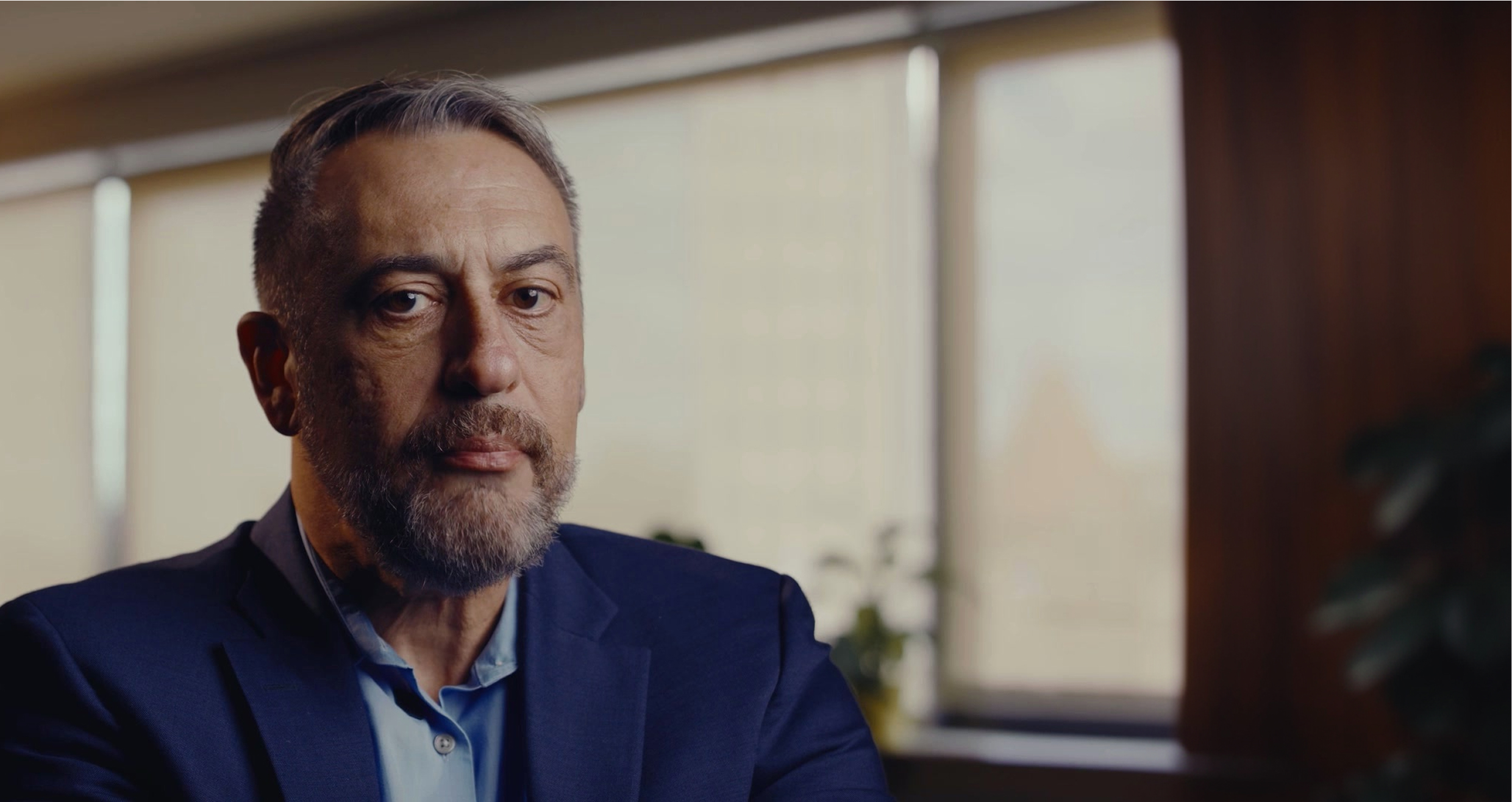
“I would love a cure. That’s obviously aspirational. But each patient that I can give an extra month with their children or their grandkids or their spouse or contributing to our planet is important.”
Andrew Brenner, MD, PhD
Chair of Neuro-Oncology Research, Mays Cancer Center at UT Health San Antonio
Texas Public Radio, “Science & Medicine: A breakthrough for glioblastoma patients that may lengthen lives,” December 14, 2025.

Why Cerenome takes this on.
Cerenome’s CEO on why the company chose the toughest challenges in CNS cancer, and what it will require to change them.
Every barrier has an answer.
CNS oncology is all we do. That focus showed us that its three hardest problems arrive together: finding the disease, getting treatment to it, and proving it works. Each one makes the others harder, so we built a platform that takes on all three at once, with a capability designed for each.

Diagnostics
CSF-based cellular and molecular testing designed to help detect, characterize, and monitor cancer in the CNS.

Therapeutics
Investigational treatment delivered into the compartment where the cancer lives, past the barrier that stops most drugs.

Data Insights
Data capabilities being developed to connect diagnostic, molecular, and treatment-response information over time.
Think it solvable.
Three barriers. Three answers, working as one. That’s what it means to approach CNS cancer as a solvable system rather than a set of separate problems.